YesNutri / Beauty and Nutrition
YesNutri Probiotics Plus Spirulina
YesNutri Probiotics Plus Spirulina
Couldn't load pickup availability
- Maintain gastrointestinal health
- Promote defecation, eliminate toxins
- Promote intestinal immunity, improve ingestion
- Relieve intestinal irritation
- Eliminate bad breath and skin problem
- Resistant to gastric acid and bile, effectively colonizing the intestinal tract and enhancing the survival rate of the microbiota[1].
Product Introduction
YesNutri Probiotics Plus Spirulina consists of two natural probiotics, which help maintain gastrointestinal and digestive function health. Majority of urbanite may have gastrointestinal problems and this formula can help improve gastrointestinal health. Probiotics can balance microflora in the gastrointestinal tract, as a result to promote gastrointestinal health, protect against bad bacteria, relieve symptoms of allergy, and assists in digestion. Spirulina can help clear the way of the digestive tract and enhance nutrient absorption in the intestine. In addition, spirulina possesses detoxification power to reduce damage to kidney by drugs and heavy metals.
Product Name
YesNutri Probiotics Plus Spirulina
Pack Size
60 Tablets
Place of Origin
America
Composition
Each tablet contains:
L-Acidophilus (LA-14) 500 million CFU
Spirulina 500mg
Direction
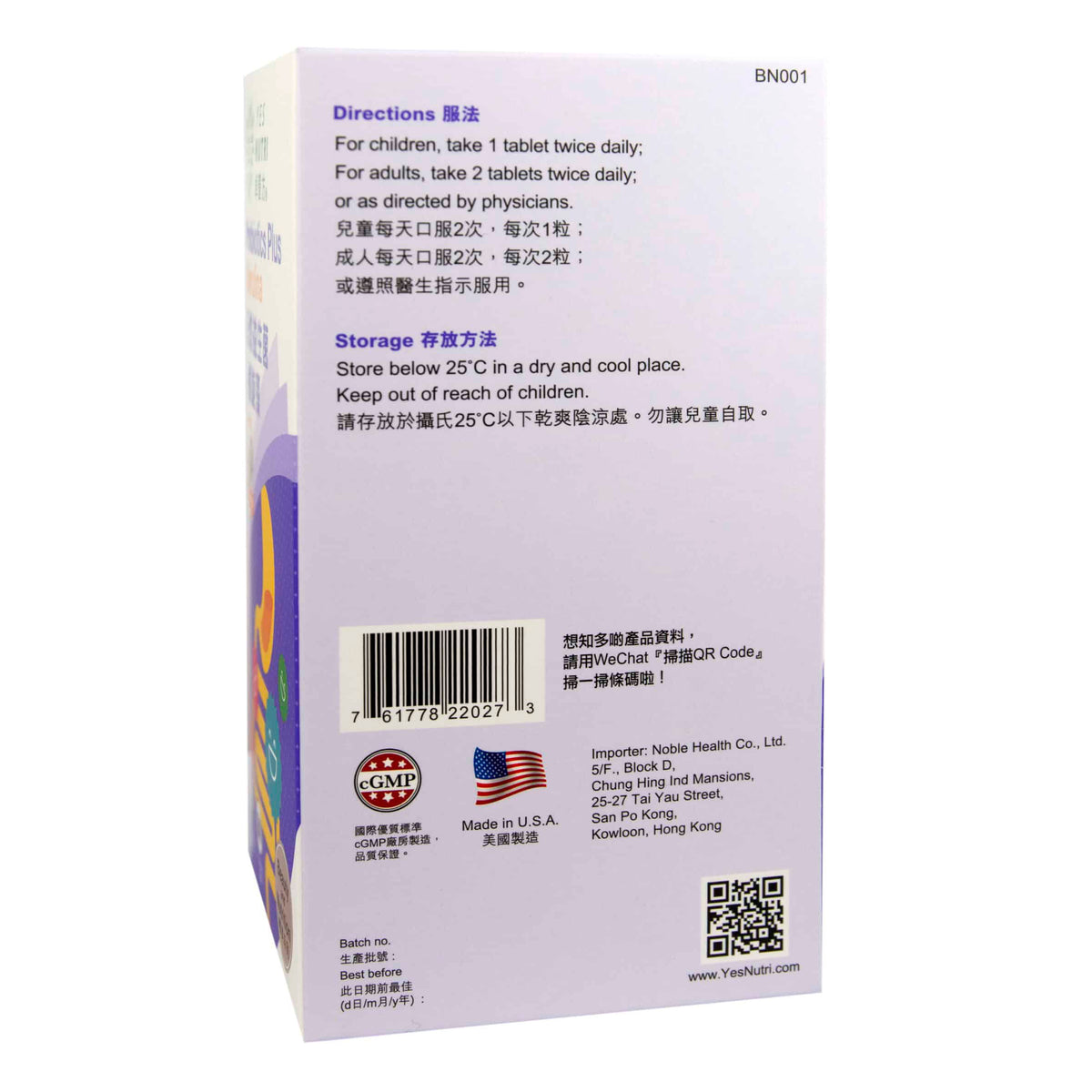
Adults take 2 tablets 2 times daily.
Children aged 6 and above take 1 tablet 2 times daily or as directed by physicians.
Description
Probiotics Maintain Balance of Gut Microflora
The Food and Agriculture Organization of the United Nations and the World Health Organization defined probiotics as "Live microorganisms which when administered in adequate amounts confer a health benefit on the host". Probiotics (derived from Greek, meaning "for life") are live microorganisms that help balance intestinal microflora and improve health. Most often, the bacteria come from two groups, Lactobacillus or Bifidobacterium. Their main functions include:
Maintain Gastrointestinal Health
Probiotics can improve the digestion problems in children. The role of probiotics is closely related to the development of many gastroenterology problems. Some strains resist to acid and adhere to the cell wall of the stomach. They reduce the growth of bacteria which may cause digestion problems.
Defense against Bacteria
Some strains of probiotics could acidify the urogenital system. It helps suppress the growth of pathogens. The "good" bacteria kick out the "bad" bacteria by competing for spaces and resources for colonization. Probiotics produce organic acids, free fatty acids, hydrogen peroxide, and bacteriocins. These can aid to defense against pathogens.
Alleviate Symptoms of Allergy & Break Down of Lactose
Probiotics regulate the level of immunoglobulin E (IgE) to reduce the allergic symptoms. Researches show that they can manage dermatology problems. Probiotics assist in gastrointestinal digestion by converting lactose to lactic acid.
The Roles of Lactobacillus acidophilus:
The Lactobacillus acidophilus in the formula is of vital importance for human health. It can regulate the balance of the intestinal flora, enhance intestinal immunity, and exhibit antibacterial activity against various pathogenic bacteria. Lactobacillus acidophilus can grow stably at relatively low pH values (below pH 5.0), thus effectively surviving in gastric acid and increasing its survival rate in the stomach, ensuring its effective colonization in the intestinal tract and maintaining its activity after reaching the gastrointestinal tract.1,2
- It can produce organic acids such as acetic acid and lactic acid, which are conducive to inhibiting the growth of pathogenic bacteria, maintaining a healthy intestinal environment, regulating the balance of the intestinal flora, and enhancing immunity.1,2
- It can serve as a source of lactase in the small intestine, assisting people with lactose intolerance in metabolizing lactose, thereby reducing intestinal discomfort symptoms such as diarrhea caused by lactose intake.1,2
- It can increase the production of pepsinogen, thereby effectively accelerating and improving gastric digestion capacity.3
Nutritious Spirulina for Multiple Benefits
Spirulina are a large number of cyanobacteria or blue-green algae. These algae are found in warm, alkaline waters around the world, especially of Mexico and Central Africa. The nutritional values of Spirulina have drawn attention over a few decades:
– Contain high content of protein (60-70%), a source of many types of essential amino acids
– Consist of multivitamins, especially B12 and β-carotene. β-carotene is an antioxidant which could suppress the damage to cells by free radicals, slowing down aging. In human body, β-carotene is converted to pro-vitamin A which has beneficial effects to the eyes and skin.
– Rich in minerals, such as iron, magnesium and calcium
– Serve as a source for high content of EPA and gamma-linoleic acid
– Compose high content of DNA and RNA. Spirulina also contains phycocyanin. When combined with chlorophyll, they become antioxidants.
Reference
- Gao, H., Li, X., Chen, X., Hai, D., Wei, C., Zhang, L., & Li, P. (2022). The Functional Roles of Lactobacillus acidophilus in Different Physiological and Pathological Processes. Journal of microbiology and biotechnology, 32(10), 1226–1233. https://doi.org/10.4014/jmb.2205.05041
- Liu, Y., Nawazish, H., Farid, M. S., Abdul Qadoos, K., Habiba, U. E., Muzamil, M., Tanveer, M., Sienkiewicz, M., Lichota, A., & Łopusiewicz, Ł. (2024). Health-Promoting Effects of Lactobacillus acidophilus and Its Technological Applications in Fermented Food Products and Beverages. Fermentation, 10(8), 380. https://doi.org/10.3390/fermentation10080380
- Tursi, F., Benedetto, E., Spina, A., De Ponti, I., Amone, F., & Nobile, V. (2024). Efficacy of a Food Supplement Containing Lactobacillus acidophilus LA14, Peptides, and a Multivitamin Complex in Improving Gastroesophageal Reflux Disease-Related Outcomes and Quality of Life of Subjects Showing Mild-to-Moderate Gastroesophageal Reflux Disease. Nutrients, 16(11), 1759. https://doi.org/10.3390/nu16111759
Share